Welcome to Episode 1 of a How To video series presented by National Center on Health, Physical Activity and Disability (NCHPAD) with the help of Mary Allison Cook, a wheelchair user for the past 23 years. She will lead us through a number of How To's for the wheelchair user. In this video you will learn the important aspects of how to choose a wheelchair that is right for you.
Showing posts with label biomechanics. Show all posts
Showing posts with label biomechanics. Show all posts
Monday, 22 December 2014

Friday, 5 September 2014
Auckland Bioengineering Institute

The Auckland Bioengineering Institute (ABI) is a cross-faculty research centre. Our research deals with the application of mathematical and engineering sciences to biology and human physiology. We aim to improve understanding of physiological processes and the diagnosis and treatment of injury or disease. Many of our staff have joint appointments in other Faculties, especially with the Department of Engineering Science in the Faculty of Engineering and the Department of Physiology in the Faculty of Medical and Health Sciences.
Muscle activation during gait
Visualisation of muscle activation during gait using an anatomically-based model of the lower limbs. Concentric contraction is indicated in yellow, isometric contraction in orange and eccentric contraction in purple respectively. (Research in musculoskeletal modelling at the Auckland Bioengineering Institute)
Sunday, 4 May 2014
Hugh Herr: The new bionics that let us run, climb and dance
Hugh Herr is building the next generation of bionic limbs, robotic prosthetics inspired by nature's own designs. Herr lost both legs in a climbing accident 30 years ago; now, as the head of the MIT Media Lab's Biomechatronics group, he shows his incredible technology in a talk that's both technical and deeply personal — with the help of ballroom dancer Adrianne Haslet-Davis, who lost her left leg in the 2013 Boston Marathon bombing, and performs again for the first time on the TED stage.
TEDTalks is a daily video podcast of the best talks and performances from the TED Conference, where the world's leading thinkers and doers give the talk of their lives in 18 minutes (or less). Look for talks on Technology, Entertainment and Design -- plus science, business, global issues, the arts and much more.
Find closed captions and translated subtitles in many languages at http://www.ted.com/translate
Follow TED news on Twitter: http://www.twitter.com/tednews
Like TED on Facebook: https://www.facebook.com/TED
Friday, 14 March 2014
Lower back pain and pelvic tilt during biking


I was always wondering what it the correct position for all my joints during biking. What can be the most energy efficient and at the same time anatomically less stressful position I should have.
Here is a wonderful website that gives nice detailed guidelines and rules of thumb for proper body position during biking.
I found very relevant to my problem the following information:
Lower Back Pain and Pelvic Tilt
This image shows two cyclists, with the one on the right in a far lower, more aggressive position. One might imagine that of the two, he might suffer more back pain. But this was not the case, with the cyclist on the left suffering debilitating pain, very quickly into a ride. The clue is in the angle of the pelvis. The rider on the left has a noticeable hinge point in his lower back as his pelvis is reluctant to lean forwards and the lower lumbar vertebrae appear to be immobile. The rider on the right meanwhile has a smooth transition from pelvis to lumbar region and along the whole spine. In the left hand case, the saddle was too low and the rider had a very stiff right hip joint. The excessive upwards movement of the knee and lack of mobility in the hip combined to push the pelvis back.
Monday, 17 February 2014
A microscope for your videos

Fun gait analysis by Kinovea!
Kinovea is a video player for all sport enthusiasts. Slow down, study and comment the technique of your athletes or of yourself. It is 100% free and open source.
Saturday, 15 February 2014
Cheetah's speed secrets are revealed
A sprinting cheetah is like "a rear-wheel-drive car," say scientists.
Japanese researchers mapped the muscle fibres of the big cat known to accelerate to record-breaking speeds.
By comparing the cheetah's muscles with those of a domestic cat and dog, the team identified the special propulsion power of its hindlimb muscles.
Want to go more deep? Read "Distribution of muscle fibers in skeletal muscles of the cheetah (Acinonyx jubatus), Megumi et al, on http://www.sciencedirect.com/:
Abstract
We examine the muscle fiber population of skeletal muscles from whole body in the cheetah (Acinonyx jubatus). In the present experiments, we showed the characteristics of fiber composition in the cheetah by comparative studies among the cheetah, domestic cat, and the beagle dog. Fiber population was determined on muscle fibers stained with monoclonal antibody to each myosin heavy chain isoform. Histochemical analysis demonstrated that many muscles in the cheetah and domestic cat had a low percentage of Type I fibers and a high percentage of Type IIx fibers, while those in the beagle dog showed a high percentage of Type IIa. The hindlimb muscles in the cheetah had a higher percentage of Type II (Type IIa + IIx) fiber than the forelimb muscles. This fact suggests that the propulsive role of the hindlimb is greater than the forelimb in the cheetah. The longissimus in the cheetah had a high percentage of Type IIx fibers over a wide range from the thoracic to lumbar parts, while the population of muscle fibers in this muscle was different depending on the parts in the domestic cat and beagle dog. This indicates that the cheetah can produce a strong and quick extension of the spinal column and increase its stiffness during locomotion. Furthermore, we found the notable difference of muscle fiber type population between flexors and extensors of digits in the cheetah. The present experiments show the characteristics of muscle fibers in the cheetah, corresponded to its ability to perform high-speed running.
Athletics - Men's 200m - T44 Final - London 2012 Paralympic Games
GOLD OLIVEIRA Alan Fonteles Cardoso BRA - Brazil
SILVER PISTORIUS Oscar RSA - South Africa
BRONZE LEEPER Blake USA - United States of America
The International Paralympic Committee (IPC) is the global governing body of the Paralympic Movement. The IPC organizes the Summer and Winter Paralympic Games, and serves as the International Federation for nine sports, for which it supervises and co-ordinates the World Championships and other competitions. The IPC is committed to enabling Paralympic athletes to achieve sporting excellence and to develop sport opportunities for all persons with a disability from the beginner to elite level. In addition, the IPC aims to promote the Paralympic values, which include courage, determination, inspiration and equality.
For further information, please visit http://www.paralympic.org.
Wednesday, 15 January 2014
American Kinesiology Association

About AKA
Our Mission
The American Kinesiology Association promotes and enhances kinesiology as a unified field of study and advances its many applications. AKA does this by advocating for kinesiology at national and international levels as well as by supporting its member departments by providing resource materials and leadership and educational opportunities for university administrators in kinesiology.
Definition of Kinesiology
Kinesiology is an academic discipline which involves the study of physical activity and its impact on health, society, and quality of life. It includes, but is not limited to, such areas of study as exercise science, sports management, athletic training and sports medicine, socio-cultural analyses of sports, sport and exercise psychology, fitness leadership, physical education-teacher education, and pre-professional training for physical therapy, occupational therapy, medicine and other health related fields.
Sunday, 11 August 2013
Foot analysis for runners
It is of extreme importance to have comfortable and ergonomic shoes if you are a city runner. I recently went to the Asics store in Amsterdam in order to buy a pair of running shoes. They offered me a free foot analysis before buying my runners, which I enjoyed very much. They have really good knowledge of gait analysis, especially when it has to do with city runners.
I am pointing out the major parts of the manual they gave me after my foot analysis and I add some of my knowledge in order to give you useful information on this matter:


1. Foot length
The length of your foot is measured from the end of your heel to the end of your longest toe, along an imaginary line running from the center of your heel to the end of your longest toe. For sport shoes, you should choose a size approximately 8-10 mm larger than your base foot length. This is because your feet become slightly longer in the propulsion phase o the gait cycle.
2. Ball girth (or circumference)
"Ball girth" measures around the foot, from the ball of the big toe to the ball of the little toe. Ball girth is different from foot width, which is a simple two-dimensional measurement. It is a very important measure for correct shoe fitting.
3. Heel breadth
Heel breadth is measured from the inside to the outside of the hell, at 18% of the distance of the whole foot, measuring from the back of the heel. If your heel is very narrow, you will have to place it more firmly into the heel of your shoes by tightening your laces a little more. If your heel is wide, there is no problem.
4. Instep height
Because it is related to the ball girth, instep height has a subtle effect on fitting. The place to measure the instep is roughly equal to three fingers from the base of the ankle. For example, a narrow ball girth and a high instep may not fit slim shoes.
5. Arch height
Arch height is measured by the height of the navicular bone and is directly linked to the type of arch and instep height. If your feet have low arches and your footprint shows dropped arches, you may have flat feet. Losing the basic shape of arch tends to cause more tiredness and pain.
6. Heel angle
The hell angle is the angle between the vertical line that passes through the heel and the vertical line that passes through your body center of gravity. There are two possibilities regarding the heel angle: pronation (eversion) or supination (inversion). The average is 1.5 degrees of eversion. Excessive eversion increases loading on the inner side of the foot and tiredness around the big toe. Excessive inversion increases loading on the outside of the foot decreasing stability and flexibility.
7. Toe angle
Toe angle shows the inclination of your big toe. In pathologies, it can be either valgus (outward point of the big toe) or varus (inward pointing of the big toe). Both cases have negative effects on your gait.

8. Footprints
There are two main archs in your foot, the transverse and the longitundinal arch. Depending on their height, three deformities can be distinguished:
a. Increased height of the longitundinal arch (pes cavus) - runners with high arched foot choose shoes in the under-pronator to neutral categories.
b. Loss of the longitundinal arch (flatfoot, or pes planus) - runners with flat feet should select shoes in the overpronator to severe over-pronator categories
c. Loss of the transverse arch (splayfoot, or pes tranversoplanus) - same as flatfoot runners
9. Running styles
Depending on the degree of pronation (outward movement of the foot) during running, you can be categorized in one of the three major running styles (the picture above show the right foot from behind):
a. Overpronation
- excessive outward movement of the foot
- more load is put on the inside part of the foot, which is transferred to the knee, hip and lower back
- waste of energy and early fatigue
- higher risk of injury
b. Neutral
- balanced gait
- efficient sock absoprtion
- more biomechanically efficient
- low risk of injury
c. Underpronation (or supination)
- excessive inward movement of the foot
- more load is put on the outside of the foot, which is transferred to the knee, hip and lower back
- high foot arch
- rigid foot
- high risk of injury but very rare case
Monday, 22 July 2013

Friday, 5 July 2013
Having a short Achilles tendon - can you benefit from it?

An interesting article on achilles tendon length.
Having a short Achilles tendon may be an athlete's Achilles heel
Tendon length varies in all major groups and from person to person. Tendon length is practically the discerning factor where muscle size and potential muscle size is concerned. For example, should all other relevant biological factors be equal, a man with a shorter tendons and a longer biceps muscle will have greater potential for muscle mass than a man with a longer tendon and a shorter muscle. Successful bodybuilders will generally have shorter tendons. Conversely, in sports requiring athletes to excel in actions such as running or jumping, it is beneficial to have longer than average Achilles tendon and a shorter calf muscle.
Wednesday, 26 June 2013
Principles of natural running
Instructional video on natural running, by Dr. Mark Cucuzzella, Director of the Natural Running Center. http://naturalrunningcenter.com.
Monday, 17 June 2013
The American Society of Biomechanics

"Biomechanics is the study of the structure and function of biological systems by means of the methods of mechanics." (Herbet Hatze, 1974)
Biomechanics represents the broad interplay between biological systems and mechanics and foster integration of scientific knowledge between related basic and applied subdisciplines. Click here for a history of biomechanics.
The American Society of Biomechanics (ASB) was founded in 1977 to encourage and foster the exchange of information and ideas among biomechanists working in different disciplines and fields of application, biological sciences, exercise and sports science, health sciences, ergonomics and human factors, and engineering and applied science, and to facilitate the development of biomechanics as a basic and applied science.
Arm and shoulder pain in SCIs: seeking solutions


Many people with SCI who use manual wheelchairs develop chronic, disabling arm, shoulder or hand pain that interferes with daily life. Studies have found that between 31%-73% of persons in the SCI population have shoulder pain, and 49%-73% have painful carpal tunnel syndrome.
Despite the frequency of these syndromes, little is known about their specific causes or how to prevent them, and treatments are not always effective.
In order to unravel this mystery, the Northwest Regional SCI System at the UW Department of Rehabilitation Medicine is collaborating with two other SCI centers (University of Pittsburgh and the Kessler Institute) on a study of wheelchair propulsion and transfer techniques in the SCI population.
Wheelchair propulsion method: push or pull?
Have you ever thought that it would be better for a wheelchair user to pull instead of push in order to move forward? Would that be biomechanically better? Which muscles would be activated in each case? Is there clinical evidence that supports each case? What is the effect on the muscle soreness and fatigue as well as on cardiovascular endurance in each case?
These were the questions that made the RowWheels team to re-design and re-engineer a wheelchair from scratch. And they came up with this wheelchair in the video.

In their website: rowwheels.com you can find very usefull information on the following:
and many more...
Interesting idea which I am curious to see how it will be introduced to and supported by the clinicians and the wheelchair users.
As they mention in their website, "benefits described, though likely, are still pending validation through clinical studies".
Saturday, 15 June 2013
The Hand Foundation - improvehands.org
Who we are
The Hand Foundation financially supports applied scientific research and development of prostheses and orthoses for people with a hand or arm deficiency.
Prostheses
Worldwide there are many people who miss a part of their hand or arm. This can be caused by an amputation or by a congenital reduction deficiency. The current available hand and arm prostheses only provide a limited functionality. Furthermore using one of the current prostheses often causes several problems, e.g. the prosthesis is to heavy, or it is regularly broken. As a result half of the people with a reduction deficiency preferfs not to wear a prosthesis at all (Biddiss, 2007). This, on its turn, might result in overuse of the healthy arm.
The Hand Foundation would like to see better hand- and arm prostheses becoming available. Prostheses that are easy to operate, that are lightweight, and that are seldom broken. Therefore the Hand Foundation supports research and development of prostheses that meet the user needs.
Orthoses
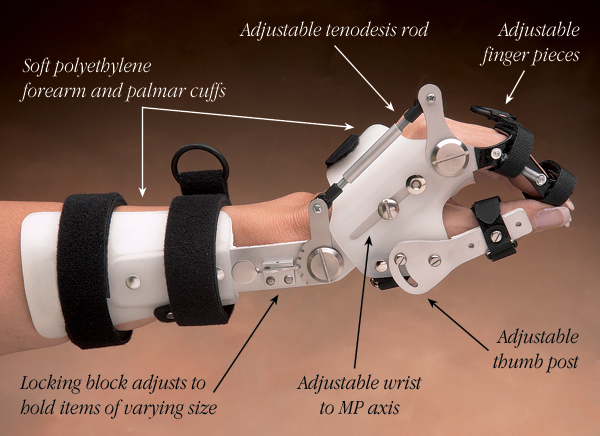
For people who do have an arm, but are not able to use it, orthoses are available. An orthosis supports the movement or positioning of the arm, e.g. in case of a brachial plexus injury. Unfortunately most of the orthoses only offer passive support. An orthosis supports the positioning of the hand. However it does not restore the grasp function of the hand.
The Hand Foundation would like to see better hand- and arm orthoses becoming available. Orthoses that have active functionality, that are easy to operate, and that are lightweight. Therefore the Hand Foundation supports research and development of orthoses that meet these user demands.
Friday, 14 June 2013
The course of the n. ischiadicus in relation to the piriformis syndrome

Piriformis muscle
Origin: Sacrum (facies pelvina ventrally)
Insertion: Trochanter major
Actions: Hip > ABD, EXT, EXT ROT
It is well known that the when the sciatic nerve that normally passes under the piriformis muscle is compressed, then radiating pain in the buttock, posterior thigh and lower leg appears - and this is known as the piriformis syndrome. What can cause this syndrome?
1. Inactive gluteal muscles
I have already posted an article on the lower cross syndrome. Based on this syndrome, usually, gluteal muscles become week - and it is these muscles that play an important role in the hip extension and adduction. When these muscles are weak, the piriformis muscle is "forced" to work harder and become tight, compressing the sciatic nerve. Besides, overuse injury resulting in piriformis syndrome can result from activities performed in the sitting position that involves strenuous use of the legs as in rowing/sculling and bicycling.
2. Hypomobile sacroiliac joints
Another purported cause for piriformis syndrome is stiffness, or hypomobility, of the sacroiliac joints. The resulting compensatory changes in gait would then result in shearing of one of the origins of the piriformis, and possibly some of the gluteal muscles as well, resulting in piriformis malfunction.
3. Foot overpronation
Piriformis syndrome can also be caused by overpronation of the foot. When a foot overpronates it causes the knee to turn medially, causing the piriformis to activate to prevent over-rotating the hip. This causes the piriformis to become overused and therefore tight, eventually leading to piriformis syndrome.
4. Falling injury
Piriformis syndrome may also be associated with falling injury.
Finally, it is interesting to know the course of the n. ischiadicus in relation to the piriformis muscle (after Rauber/Koprch).
The n. isciadicus leaves the lesser pelvis through the foramen infrapiriforme in almost 85% of cases. However, it is possible (in about 15% of cases) that the fibular division and sometimes the n. cutaneous femoris porterior pass through the piriformis muscle and may become compressed at that location. In only about 0.5% of cases the fibular part of the n. isciadicus leaves the lesser pelvis above the piriformis muscle.
Reference: Schuenke M, Schutle E, Schumacher U. Thieme Atlas of Anatomy: General Anatomy of the Musculoskeletal System. New York: Thieme Medical Publishers, Inc.; 2006. p. 493.
Tuesday, 4 June 2013
Change in load on L3 disc

Within the lumbar spine, different postures can increase the pressure on the intervertebral discs. Studies of intervertebral pressure changes in the L3 disc with changes in posture were performed and concluded in a table similar to the above one. The pressure in the standing posture is classified as the norm, and the values given are increases or decreases above or below this norm that occur with the change in posture (Magee DJ. Orthopedic physical assessment, 5th ed. Alberta: Saunders Elsevier; 2007).
Saturday, 1 June 2013
The effect of sitting on your hip muslces

Technology and internet in our era has brought a lot of new ideas into life and has made it more fun and easier than it was before. We all love spending hours in front of our screens surfing on the web, watching our favorite YouTube videos, socializing on Facebook. or even writing articles on our favorite blog (;-).
We all know the negative effects of the sedentary life, but thank to the explosion of the health awareness movement the last years, more and more people have started changing their life style towards a more active way.
What I am presenting in this article is the effect of this sedentary life on 2 very important for a strong and healthy spine muscles - the iliopsoas and the gluteus maximus. I have already posted an article on the tendency of iliopsoan to become short and tight and the gluteus maximus to become weak (the lower cross syndrome).
Let's have a picture of these 2 muscles:


picture 1. iliopsoas picture 2. gluteus maximus
It can be easily pictured, that when we sit and our hips are in flexed position, the iliopsoas muscle is in a shortened position, while the gluteus maximus is in a stretched position. This fact creates a major problem other than the obvious effect on our muscles - inequality in the pelvis position.
As it can be seen in the pictures above, both muscles originate from the pelvis. The "iliacus" part of the iliopsoas originates from the fossa iliaca and the gluteus maximus originates from the facies glutea. This means, under certain circumstances, that they both have an effect of the position of the pelvis. The iliopsoas muscle, if contracted in the standing posture, it has the fixed part on the femur and the mobile part on the spine and the pelvis. This causes a forward tilt of the pelvis. On the other hand, the gluteus maximus, if contracted in the standing posture, it has its fixed part on the femur and the mobile part on the pelvis. This causes a backward tilt of the pelvis.

As a result of all these, a shortened iliopsoas muscle and a weak gluteus maximus muscle cause a forward tilt of the pelvis, which consequently leads to a compensating hyper-lordosis of the lumbar spine. And it is this hyper-lordosis that can cause quite a few problems if it is not treated properly and soon - chronic low back pain, herniated nucleus pulposis, spondylolisthesis, sponylolysis etc.
There is also a very well know theory/approach by Dr. Vladimir Janda about the tendency of some muscles to become weak and some others to become tight.
What is important for a Physical Therapist to know after that, is some specific stretching exercises for the iliopsoas and some strengthening exercises for the gluteus maximus.
Iliopsoas stretching exercises:

Here are two typical stretching exercises one can do for the iliopsoas muscle, always with after the assessment of a Physical Therapist and with his/her assistance. In the both pictures, the left iliopsoas is stretched. It is of extreme importance for someone to do these exercises under the guidance and supervision of a Physical Therapist in order to avoid wrong posture, further tissues damage or lumbar spine hyper-lordosis.
Gluteus maximus strengthening exercises
Research presented in the Journal of Orthopaedic and Sports Physical Therapy (JOSPT) presented the best exercises for the gluteus maximus. The authors of this particular study used electromyography (EMG) to quantify and compare signal amplitude as the gluteus maximus (and gluteus medius) fired in order to determine which therapeutic exercises most effectively recruit the glutes.
The result is that the 3 following exercies are the most effective:
One-leg squat - click for the JOSPT video
One-leg deadlift - click for the JOSPT video
Sideways, front, and transverse lunges - click for the JOSPT video
Subscribe to:
Posts (Atom)